Key Takeaways
Colocation hosting allows businesses to own their servers while placing them inside a professional data center environment.
It removes the need to build and maintain a private data center while keeping full hardware control.
Strong power, cooling, network connectivity, and physical security improve uptime and reliability.
Colocation works well for businesses with compliance needs, stable workloads, and long-term infrastructure plans.
The global colocation market is growing fast and is expected to cross $165 billion by 2030, driven by data growth and digital services.
Every modern business depends on data. Websites, applications, emails, databases, and internal systems all need servers that stay online all the time. As data grows, keeping servers in a small office or back room becomes risky and expensive. Power cuts, poor cooling, weak internet, and physical security risks can cause downtime, data loss, and customer trust issues. This is where colocation hosting becomes important.
The global data center colocation market was valued at around $69 billion in 2024 and is projected to reach over $204.4 billion by 2030, growing steadily each year. This growth is driven by cloud adoption, e-commerce, fintech, healthcare systems, and content platforms. In Asia, demand is rising due to faster internet access, digital payments, and regional data regulations. Colocation offers a middle path. You keep ownership of your servers while using enterprise-grade infrastructure that is hard to build on your own.
What is Colocation Hosting?
Colocation hosting means renting space inside a professional data center to place your own physical servers and networking equipment. You buy and own the servers. You decide the operating system, applications, security settings, and data policies. The colocation provider supplies:
Secure building
Continuous power
Backup generators
Cooling systems
High-speed internet connectivity
Physical security
Consider it like renting a secure warehouse with electricity, climate control, and guards, but you store and manage your own valuable equipment. A colocation data center is built specifically for this purpose and follows strict standards for uptime and safety. Providers such as Atlantic.Net offer compliant colocation environments for regulated industries. This setup is ideal for companies that want strong performance without building their own facility.
Types of Colocation Hosting
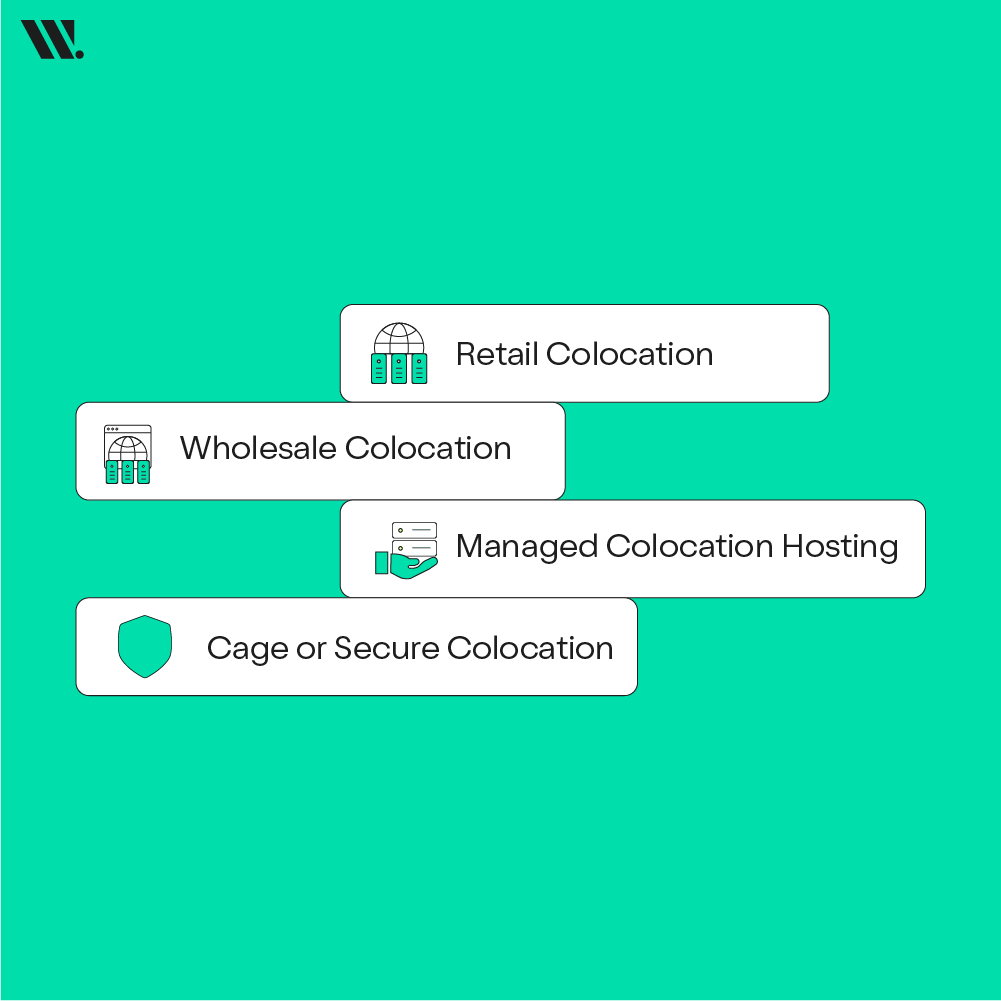
Different businesses have different infrastructure needs. Colocation services come in multiple formats to match those needs.
Retail Colocation
Retail colocation is the most common entry point. You rent a small portion of rack space, often measured in rack units. This option is suitable for small and medium businesses that need reliable infrastructure but do not require a large footprint.
Example:
A software company running one application server and a backup server can place both in a shared rack. Retail colocation keeps costs manageable while offering enterprise-level facilities.
Wholesale Colocation
Wholesale colocation involves renting large spaces such as multiple racks, private suites, or entire floors. This option fits enterprises with high power usage, large server fleets, or strict isolation requirements.
Example:
A large payment processing company may lease a private suite to manage thousands of transactions per second securely. Wholesale colocation offers better cost per rack at scale and customization.
Managed Colocation Hosting
Managed colocation hosting adds operational support on top of space rental. The provider helps with tasks like hardware monitoring, basic troubleshooting, rebooting systems, or replacing faulty components. This is useful when your technical team is small or remote.
Example:
A growing SaaS business may rely on managed services so technicians at the facility can handle physical tasks. Providers like BSO focus on high-performance connectivity and managed infrastructure support.
Cage or Secure Colocation
This type provides a locked cage or private enclosure inside the data center. It is used by organizations with strong compliance or security needs.
Example:
Healthcare platforms handling patient data often choose caged environments for extra access control.
How Colocation Hosting Works
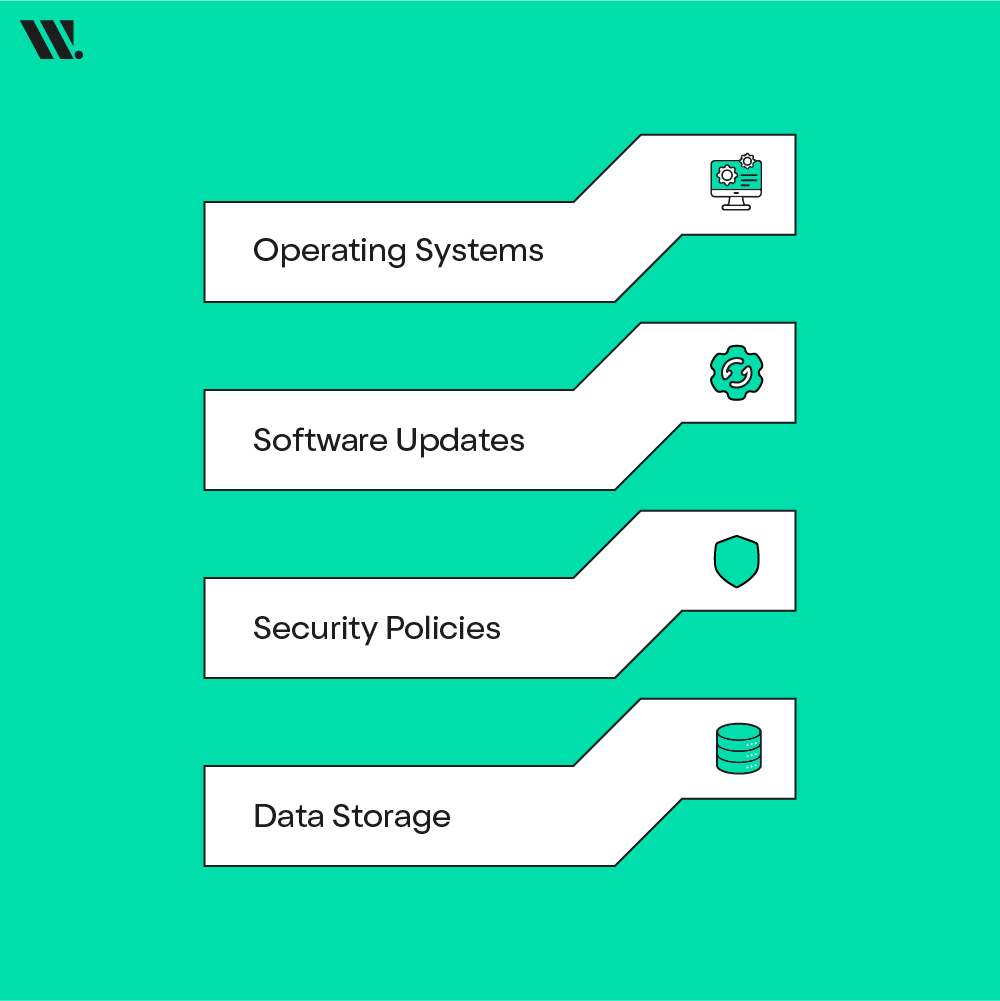
The colocation process is simple but structured. First, you purchase or prepare your servers. These can be brand-new systems or existing hardware you already own. Next, the servers are shipped to the colocation facility. Trained technicians install them into racks, connect power lines, network cables, and cooling paths. Once installed, your team manages the servers remotely using secure access tools. You control:
Operating systems
Software updates
Security policies
Data storage
The data center manages physical infrastructure, including:
Redundant power feeds
Uninterruptible power supplies (UPS)
Backup generators
Advanced cooling
Fire detection and suppression
Physical access control
Internet connectivity comes from multiple carriers to make sure high availability and low latency. You pay recurring fees based on rack space, power usage, bandwidth, and any optional services.
Key Colocation Features and Benefits
Colocation hosting stands out because it combines ownership with professional infrastructure. Instead of managing power, cooling, and security on your own, you place your servers in a purpose-built data center designed to run systems without interruption. This gives businesses stability, control, and long-term value. Colocation brings many advantages that help your business run smoothly. Here are the main benefits:
Reliable Power Infrastructure
Colocation facilities are built with multiple power layers to prevent outages. Electricity comes from more than one source, supported by uninterruptible power supplies and backup generators. If one power line fails, another takes over automatically. This setup keeps servers running during grid failures, storms, or maintenance work. For businesses running payment systems, internal tools, or customer platforms, this level of power reliability prevents costly downtime.
Advanced Cooling Systems
Servers generate heat, and heat damages hardware over time. Colocation data centers use advanced cooling designs, such as hot and cold aisle layouts and precision air conditioning. These systems maintain stable temperatures even when racks are fully loaded. Proper cooling extends server life and keeps performance consistent during heavy usage periods.
High-Speed and Redundant Connectivity
Colocation centers connect to multiple internet carriers at the same time. This means data can take the fastest path available and switch routes if one network has issues. Businesses benefit from low latency, better uptime, and smoother access for users. This is important for applications that rely on real-time data or constant availability.
Physical Security and Compliance
Security is a major reason companies choose colocation. Facilities use guarded entrances, surveillance cameras, biometric access controls, and strict visitor logs. Only authorized people can enter server areas. Many centers also meet compliance standards required for handling sensitive information. This helps businesses protect data and meet legal or industry rules without building their own secure site.
Cost Control and Predictable Spending
Building a private data center requires high upfront costs for land, construction, power systems, and staff. Colocation avoids this by spreading costs over monthly fees. Businesses pay for rack space, power usage, and connectivity. This makes budgeting easier and allows companies to scale without large capital spending.
Full Hardware and Software Control
With colocation, you own your servers. You choose the hardware, operating system, storage type, and security tools. This level of control is useful for custom workloads, legacy systems, or applications that cannot run well in shared environments. You decide how everything runs while the provider handles the building and utilities.
Common Colocation Use Cases
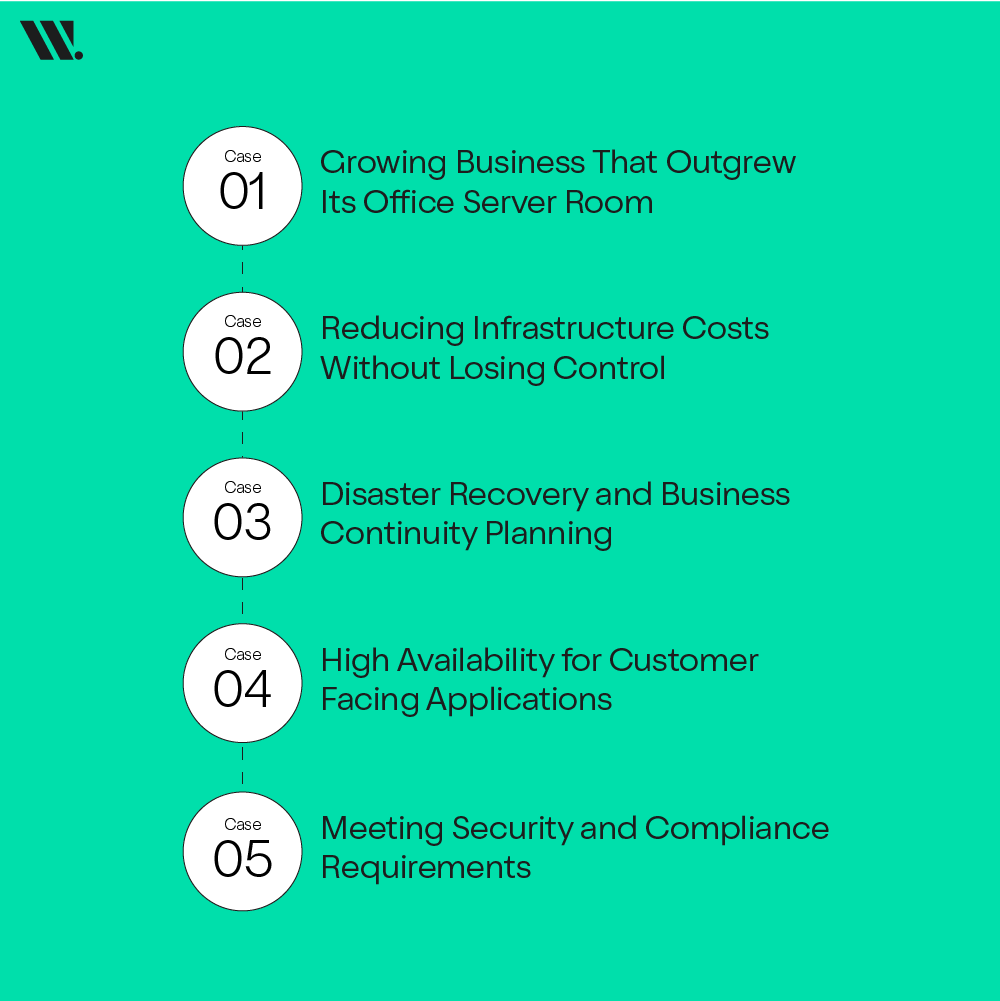
Colocation data centre services are often chosen when businesses outgrow their own server rooms or want stronger reliability without losing control. Instead of running servers inside an office or private facility, organizations move their equipment into a professional colocation data center. The provider manages the building, power, cooling, and network access, while the business keeps full control over its servers, software, and data.
This model removes the burden of running complex infrastructure while keeping ownership intact. Below are common use cases that show how colocation solves practical business problems.
Case 1: Growing Business That Outgrew Its Office Server Room
A mid-sized digital services company was running its servers from a small office. As the business grew, servers started overheating, power cuts caused downtime, and internet speed became inconsistent. Upgrading the office setup would require new electrical lines, cooling systems, and security measures.
By moving its servers to a colocation data center, the company placed its equipment in a space built for constant operation. The data center provided stable power, advanced cooling, and high-speed network connections. The business kept full control over its servers but removed the daily risk of outages and hardware damage. This allowed the company to focus on growth instead of infrastructure issues.
Case 2: Reducing Infrastructure Costs Without Losing Control
An organization with its own private data center faced rising operational costs. Power bills, generator maintenance, cooling upgrades, and security staffing became expensive over time. Rebuilding or upgrading the facility required heavy capital investment.
The company chose colocation instead. By relocating its servers to a professional colocation facility, it eliminated building maintenance costs while keeping ownership of all hardware. Monthly costs became predictable, and long-term spending dropped compared to running a private site. The company gained enterprise-level infrastructure without the burden of owning a building.
Case 3: Disaster Recovery and Business Continuity Planning
A software company needed a reliable disaster recovery setup. Its main servers were located in one city, making the business vulnerable to power failures or regional outages. Creating a second private data center was not practical.
The company placed backup servers in a separate colocation data center. Data was replicated regularly, allowing systems to be restored quickly if the main site went offline. This setup ensured business continuity and met internal recovery targets. Colocation provided a secure secondary location without doubling infrastructure costs.
Case 4: High Availability for Customer-Facing Applications
An online platform depends on 24/7 availability. Even short downtime affected customer trust and revenue. Web hosting servers in-house caused frequent service interruptions during power issues or network failures.
Moving to colocation solved the problem. The data center supplied redundant power circuits, dedicated UPS systems, and generator backup. Multiple internet carriers ensured constant connectivity. As a result, application uptime improved significantly, and service interruptions were reduced. Customers experienced smoother access, and internal teams spent less time handling emergencies.
Case 5: Meeting Security and Compliance Requirements
A company handling sensitive business data needed stronger physical security and compliance controls. Its office environment could not support strict access controls, monitoring, or regular audits.
Colocation offered a secure environment with controlled entry, surveillance, and documented security processes. The data center followed industry compliance standards and regular testing. The company maintained control over data and systems while meeting regulatory expectations more easily than before.
Performance and Its Limitations
Colocation hosting delivers strong and predictable performance because servers run in optimized environments with stable power, cooling, and network access. Businesses benefit from consistent speeds and low downtime, especially for long-running applications. However, colocation also has limitations that should be understood before choosing it.
Hardware must be purchased and maintained by the business
Physical upgrades take more time than cloud-based changes
Skilled IT staff are required for system management
Power-heavy workloads can increase monthly costs
On-site visits may be needed for complex hardware work
Colocation Hosting and the Future
Colocation continues to grow as data usage increases across industries. Businesses generate more data than ever, and many want to keep control instead of depending fully on shared platforms. Colocation supports this by offering stable infrastructure that works well with modern systems.
The future of colocation includes closer integration with cloud services, allowing businesses to run core systems on owned hardware while using cloud platforms for scaling and testing. Energy-efficient designs and renewable power sources are also becoming more common as sustainability becomes a priority. As demand for reliable and secure data handling grows, colocation remains a strong long-term solution.
Colocation vs Cloud vs Dedicated Server Hosting
Each hosting model serves a different purpose. The right choice depends on control needs, budget, and workload type. Colocation gives ownership and stability. Cloud focuses on flexibility and speed of change. Dedicated servers provide managed hardware without ownership.
Feature | Colocation Hosting | Dedicated Server Hosting | Cloud Hosting |
Hardware ownership | Business-owned | Provider-owned | Provider-owned |
Control level | Full control | High control | Limited control |
Scalability | Physical expansion | Plan-based upgrades | Instant scaling |
Cost structure | Hardware + monthly fees | Monthly rental | Usage-based billing |
Performance | Consistent and predictable | Stable | Can vary |
Maintenance | Business responsibility | Provider handles | Provider handles |
Colocation fits businesses that value control and long-term efficiency. Cloud fits changing workloads. Dedicated servers suit those who want managed hardware without buying it.
Who Should Choose Colocation Services?
Colocation works best for businesses that want strong infrastructure without building their own facilities.
Companies that already own servers
Organizations with compliance or data protection needs
Businesses running custom or legacy applications
Teams that need stable, predictable performance
Companies planning long-term infrastructure use
These organizations benefit most from colocation’s balance of control and reliability.
When is the Right Time to Switch to Colocation Hosting Services?
Switching to colocation makes sense when existing setups can no longer support business growth. Frequent outages, power issues, and limited cooling are common signs. Rising maintenance costs and a lack of physical security also push companies to look for better options.
Many businesses move to colocation during expansion phases, system upgrades, or when compliance requirements become stricter. It is also a good step when cloud costs rise beyond expectations for steady workloads.
Choosing the Right Colocation Hosting Provider
Selecting the right provider affects performance, security, and long-term success. This decision should be made carefully. A good provider offers data centers in well-connected locations with access to multiple network carriers. This improves speed and reduces dependency on a single internet route.
Infrastructure quality is important. Look for facilities with redundant power feeds, backup generators, and modern cooling systems that support high-density racks.
Security measures should include controlled access, monitoring, and clear procedures for handling equipment. Compliance certifications add assurance for sensitive workloads.
Support services matter more than many expect. Remote hands support, quick response times, and clear communication help reduce operational stress.
Transparent pricing avoids surprises. Clear breakdowns of power usage, bandwidth, and additional services help with long-term planning.
Experience and reputation also play a role. Established providers usually have proven processes and stable operations.
Common Misconceptions About Colocation Hosting
Colocation is often misunderstood, which leads some businesses to avoid it unnecessarily. Many think colocation is only for large enterprises, but smaller companies use shared racks successfully. Others believe it is more expensive than vps hosting, but for stable workloads, it often costs less over time.
Some assume control is limited, when in fact colocation offers full hardware control. Another misconception is that scaling is difficult, but most providers allow easy expansion by adding racks or power. There is also a belief that security is weaker than in-house setups. In reality, professional data centers offer far stronger physical security than most private offices.
Final Thoughts
Colocation hosting remains a powerful option for businesses that value control, performance, and long-term stability. It removes the burden of building and managing physical infrastructure while preserving ownership and customization.
As data demands increase and hybrid models expand, colocation continues to play a central role in modern IT strategies. For organizations with steady workloads and uptime needs, it is a solution worth consideration.
FAQs for Colocation Hosting
1. Can colocation hosting integrate with cloud platforms?
Yes, many colocation setups can connect to cloud services for backup, hybrid solutions, or additional processing power while maintaining control of your physical servers.
2. Is colocation suitable for small businesses?
Yes. Retail colocation options allow small companies to rent limited rack space without investing in their own data center.
3. How is bandwidth handled in colocation?
Providers usually offer metered or unmetered bandwidth. You can select a plan based on usage, ensuring predictable costs and fast connectivity.
4. What is the “remote hands” service in colocation?
Remote hands are on-site technical tasks performed by data center staff, such as rebooting servers, swapping drives, or connecting cables for customers who cannot visit the facility.
5. How quickly can I scale colocation space?
Scaling depends on available space and power. Most providers allow rapid addition of racks or cages without downtime, ideal for growing businesses.
6. Is colocation cost-effective compared to building my own data center?
Yes. Colocation reduces capital expenditure on building and maintaining a facility while providing enterprise-grade reliability and redundancy.
7. How can I ensure compliance in a colocation facility?
Choose providers with certifications like ISO 27001, SSAE 18, or HIPAA. These facilities are regularly audited, making sure your servers meet regulatory requirements.