

Key Takeaways
.NET is one of the original Top-Level Domains introduced in January 1985.
It was originally created for organizations involved in network technologies and infrastructure.
The extension is operated by VeriSign under agreement with ICANN, the global domain name authority.
Today, it is open for anyone to register, including businesses, bloggers, and individuals.
As of recent industry reports, .NET remains among the largest domain extensions worldwide.
The internet is full of web addresses, and finding the right one can feel overwhelming at first. Have you ever noticed how some sites end in .com, others in .org, and quite a few in .net? If you're thinking about starting a website, blog, online store, or just securing a personal spot online, understanding what a .net domain is can help you make a smart choice. Right now, there are over 386 million domain names registered worldwide, and .net remains one of the most established and trusted options out there.
As of the end of 2025, Verisign (the official registry operator) reported about 12.5 million .net domains in active use. That's part of the massive domain market, and it shows. .net still holds strong appeal, especially for people in technical and networking fields.
What is a Top-Level Domain?
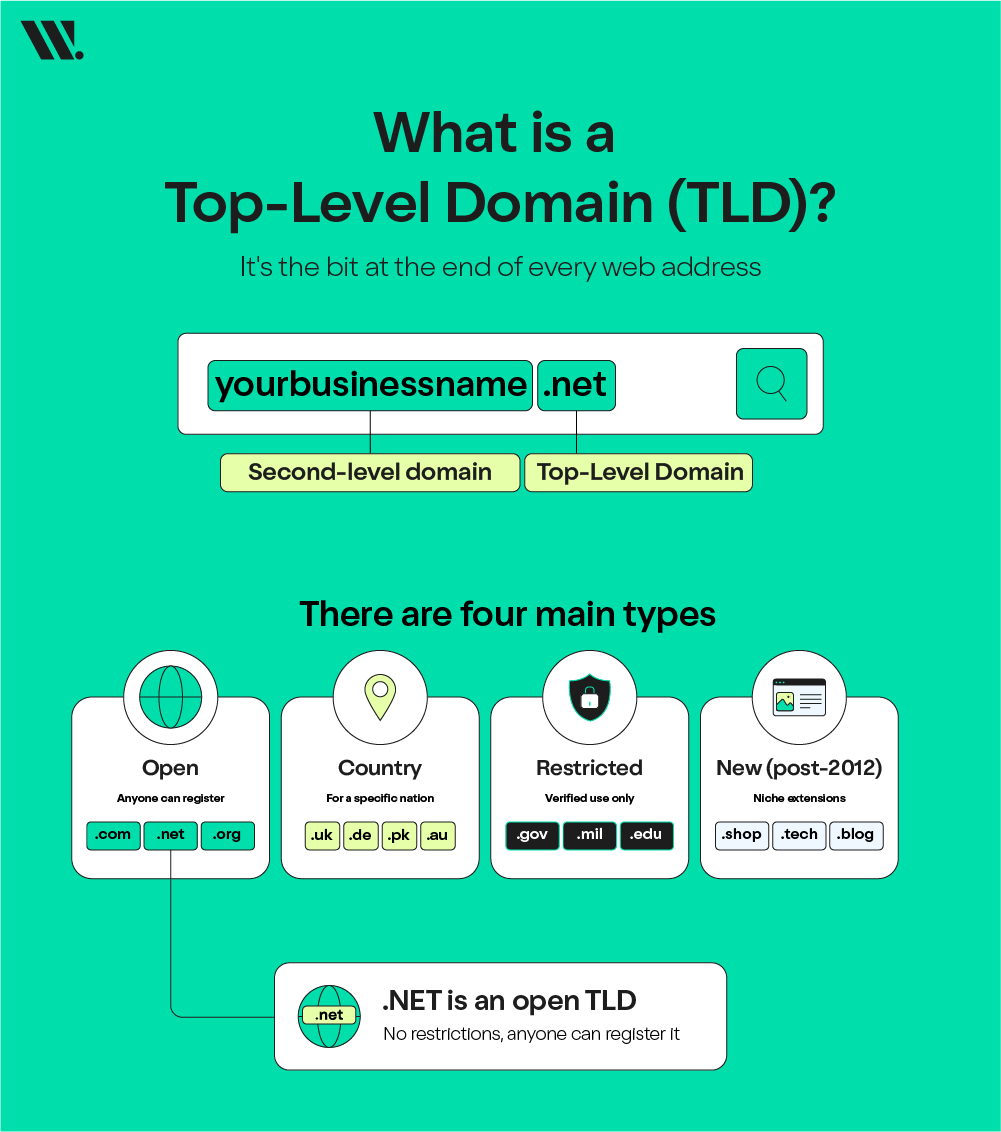
Every web address has a part at the end called a Top-Level Domain (TLD) or simply the extension. It's the last piece after the dot, like .com, .org, or .net. TLDs are managed globally to keep the internet organized and unique; no two sites can have the exact same full name.
There are different types: generic top-level domains (gTLDs) are open to anyone (like .com, .net, .org), while restricted ones include things like .gov (for governments) or .mil (for the military). .net falls into the generic category, meaning it's available for public registration without special restrictions.
What Does .NET Mean in a Web Address?
The “.net” extension originally represented “network.”
It was designed for companies and organizations involved in networking technologies, such as:
Internet infrastructure providers
Telecommunications companies
Network service providers
However, over time, the internet expanded, and the restrictions became more flexible. Today, .NET domains can be registered by anyone, regardless of industry. Because of its tech-related meaning, the extension still has a strong association with technology and online services.
History of the .NET Domain Extension
The .NET domain was introduced in January 1985, making it one of the earliest domain extensions created for the internet.
It was launched alongside several other early TLDs, including:
.org
.edu
.gov
.mil
The first recorded .NET domain name was nordu.net, created on January 1, 1985. Since then, the extension has grown significantly and remains widely used across the internet.
Who Assigns .NET Domains?
The management of domain names involves several organizations.
ICANN
The Internet Corporation for Assigned Names and Numbers (ICANN) oversees the global domain name system and coordinates the allocation of TLDs.
VeriSign
The .NET registry is operated by VeriSign, which maintains the central database of .NET domain registrations and ensures the stability of the system.
Domain Registrars
Users do not register domains directly through the registry. Instead, they purchase domains through accredited domain registrars.
What are the .NET Domain Requirements?
One of the biggest advantages of the .NET extension is that it has very few restrictions.
To register a .NET domain:
The domain name must be available
It must follow standard domain naming rules
It must be registered through an accredited registrar
Otherwise, anyone can register it worldwide, including individuals, businesses, or organizations.
What is a .NET Domain Used For?
Over time, the .NET extension has advanced beyond its original purpose. Today, it can be used for many different types of websites, from businesses and blogs to personal portfolios and ecommerce platforms. Its long history and global recognition make it a trustworthy option for building an online presence.
Using a .NET Domain for a Business
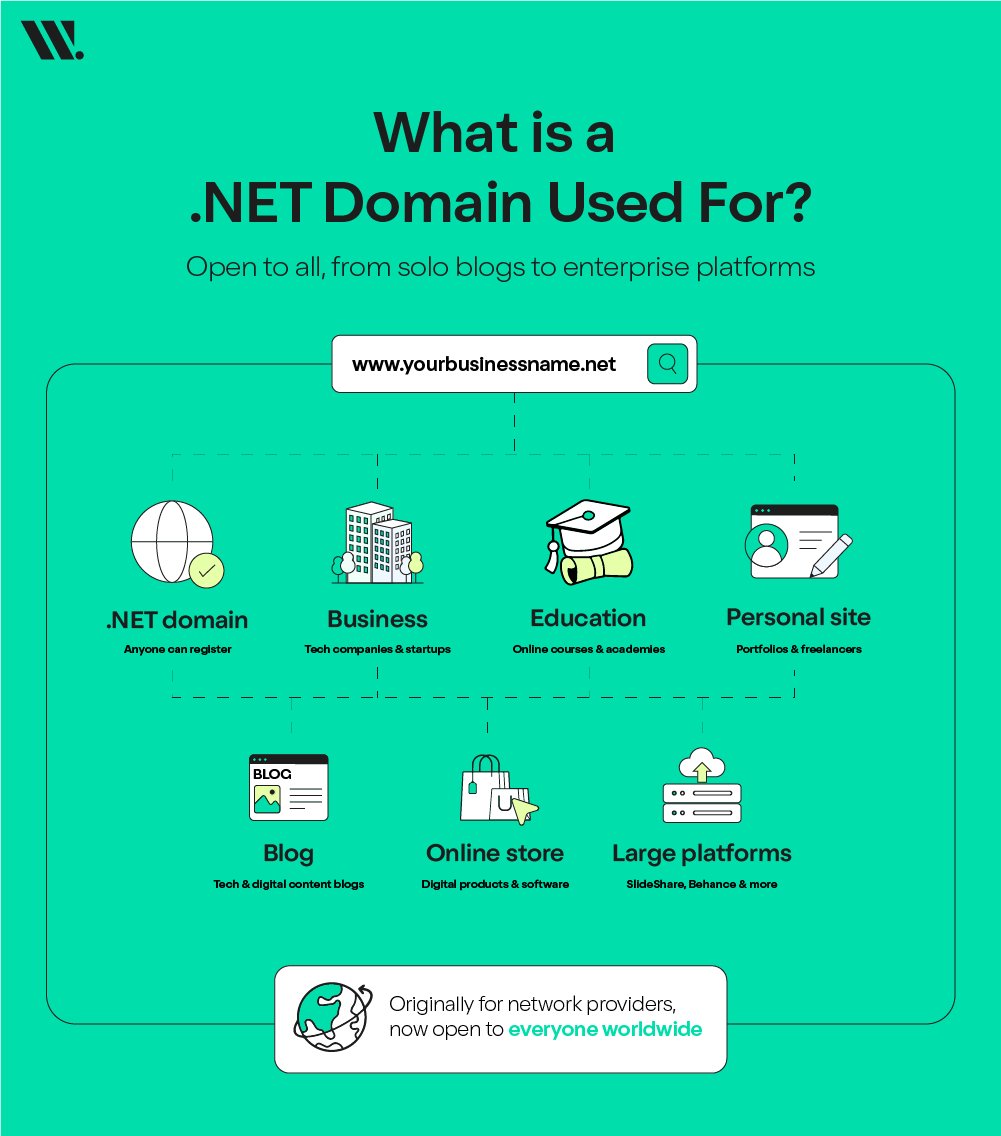
Businesses often choose a .NET domain when they want a professional web address but cannot secure the .com version. It is especially common among technology companies, digital services, and startups. The extension still carries a strong association with internet services, which can make it a good fit for tech-related brands.
Using a .NET Domain for Education
Educational websites and training platforms sometimes use .NET domains, particularly when they cannot use restricted extensions like .edu. Online courses, coding academies, and knowledge-based platforms may choose .NET because it is widely recognized and suitable for global audiences.
Using a .NET Domain for a Personal Website
A .NET domain can work well for personal websites, such as professional portfolios or resumes. Developers, designers, freelancers, and other professionals often use it to showcase their work online. It still looks credible and helps create a professional digital presence.
Using a .NET Domain for a Blog
Bloggers sometimes register a .NET domain when the .com version of their preferred blog name is already taken. It allows them to keep their brand name while still using a trusted domain extension, especially for blogs related to technology, digital business, or online services.
Using a .NET Domain for a Store
While many ecommerce websites prefer .com, a .NET domain can also support an online store. Businesses selling digital products, services, or software sometimes choose this extension because it aligns with the tech nature of their offerings. With proper branding and reliable hosting, a .NET domain can work just as effectively for an online shop.
Is a .NET Domain Good?
The .net extension has been part of the internet since the early days of the Domain Name System, which makes it one of the most recognized and trusted domain extensions today. While many businesses still prefer the .com extension, .NET remains a strong option, especially for technology companies, digital platforms, and startups that want a credible web address.
Like any domain extension, however, it comes with both advantages and limitations. Understanding these can help you decide whether a .NET domain is the right fit for your website.
Pros | Cons |
|---|---|
Well-established and widely recognized domain extension | Not as popular as .com in terms of global usage |
Often more domain name availability compared to .com | Users sometimes assume a website ends with .com |
Strong association with technology and internet services | Potential brand confusion if the .com version exists |
Suitable for businesses, startups, and online platforms | May require stronger branding to stand out |
Overall, a .NET domain can be a reliable and professional choice, particularly if your website is focused on technology, digital services, or online platforms.
What Does a .NET Domain Cost?
The cost of registering a .NET domain can vary depending on several factors. Domain registrars set their own pricing structures, and the final price may include additional services beyond the basic domain registration.
Some of the main factors that influence the cost include:
Domain registrar - Different registrars offer different pricing and promotions for .NET domain registration.
Registration period - Domains can typically be registered for multiple years, which may affect the overall price.
Premium domain names - Short, keyword-rich, or highly desirable names may be classified as premium and priced higher.
Renewal pricing - The renewal cost may differ from the initial registration price depending on the provider.
Additional services - Features such as privacy protection, DNS management, or security tools may add to the total cost.
Because of these variables, it’s always a good idea to compare domain providers and choose one that offers transparent pricing and reliable domain management services.
How to Register a .NET Domain
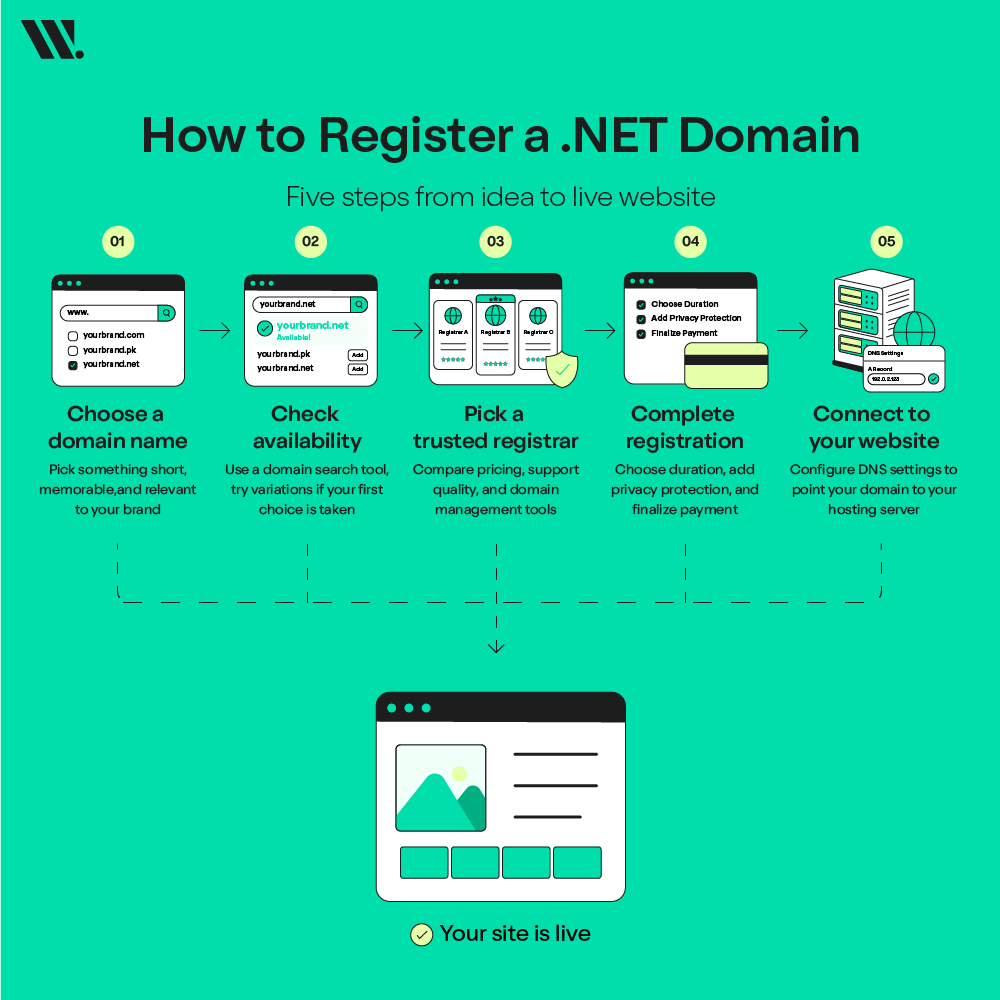
Registering a .NET domain is a simple process, but choosing the right name and registrar is important for building a strong online presence. Below is a step-by-step overview of how the process typically works.
1. Choose a Suitable Domain Name
Start by deciding on a domain name that represents your brand, business, or website purpose. A good domain name should be:
easy to remember
simple to spell
relevant to your brand or niche
Short and clear names usually perform better because they are easier for users to recall and type into a browser.
2. Check Domain Availability
Before registering a domain, you need to confirm that the name is available. This is done through a domain search or availability checker provided by domain registrars.
If your preferred domain is already registered, you may consider:
adjusting the name slightly
choosing a different keyword variation
checking if the domain might become available later
3. Select a Trusted Domain Registrar
Domains must be registered through accredited domain registrars, which are companies authorized to sell and manage domain registrations.
When choosing a registrar, consider factors such as:
transparent pricing
reliable customer support
domain management tools
security features and domain protection options
A good registrar will make it easier to manage your domain, update DNS settings, and renew the domain when necessary.
4. Complete the Registration Process
Once you choose an available domain and registrar, you can proceed with the registration process. This usually involves:
selecting the registration duration
entering contact information for the domain owner
choosing optional services like privacy protection
After completing the payment and registration details, the domain becomes officially registered under your account.
5. Connect the Domain to Your Website
After registration, the next step is linking the domain to your website or hosting provider. This is done by configuring the Domain Name System (DNS) settings, which connect the domain name to your website server.
Once the DNS settings are properly configured, visitors will be able to access your website using the new .NET domain.
.NET vs .COM: Which One Should You Use?
When choosing a domain extension, many website owners compare .NET and .COM because both are among the most recognized domain options on the internet. While they share similarities, they were originally designed for different purposes.
The .COM extension was created for commercial businesses, while .NET was introduced for organizations related to networking and internet infrastructure. Over time, both extensions became open for general use.
Here is a simple comparison:
Feature | .COM | .NET |
|---|---|---|
Original meaning | Commercial businesses | Network services |
Popularity | Most widely used domain extension | One of the oldest and most recognized alternatives |
Brand perception | Often considered the default choice for businesses | Strong association with technology and digital services |
Domain availability | Many names are already registered | More availability for new domain names |
In most cases, businesses prefer .COM if it is available, because it is the most familiar extension for users worldwide. However, if the .com version of your desired name is already taken, .NET is one of the best alternatives.
For technology startups, software platforms, and digital services, the .NET extension can actually feel more aligned with their industry, making it a practical and professional choice.
Popular Companies That Use .NET Domains
Several well-known websites use the .NET extension, particularly in technology and digital platforms.
Examples include:
These examples show that the extension can support large platforms with millions of users.
Should You Use a .NET Domain for Your Website?
A .NET domain is more than just an ending; it’s a reliable, history-rich choice that signals “connected” and “professional,” especially for tech, networking, or creative projects. Whether you’re building a business site, blog, or online store, it’s worth considering if it fits your brand. It’s also a smart alternative if the .com version of your desired name is already taken.
Remember, your domain is just the start. Strong branding and valuable content matter most. You can check .NET domain availability and register your domain with Websouls, and we offer help you pick the perfect domain for your website.
FAQs About .NET Domains
1. What is a premium .NET domain?
Premium .NET domains are short, highly desirable, or keyword-rich domain names that often come at a higher price. These domains can help with branding, memorability, and online visibility.
2. Can expired .NET domains be reused?
Yes. When a .NET domain expires, it may enter a grace period and then a pending deletion phase. After that, it becomes available for registration again. Some businesses look for expired .NET domains to get valuable names that were previously owned.
3. Are .NET domains secure?
A .NET domain can be secured just like other domains. You can enable SSL certificates, DNSSEC, and privacy protection to ensure your website and visitors remain safe.
4. How long can I register a .NET domain for?
.NET domains can typically be registered for 1 to 10 years at a time. Most registrars also offer auto-renewal options to prevent losing the domain accidentally.
5. Are .NET domains good for SEO?
Yes. Search engines treat .NET domains like other generic top-level domains. What matters most for SEO is quality content, site structure, and backlinks, not the extension itself.
6. Can I buy multiple .NET domains for the same brand?
Yes. Many brands secure variations of their name with .NET to protect their brand identity, prevent competitors from taking similar domains, and cover different product lines or regions.
7. Why do .NET domains cost more than .COM and .ORG?
.NET domains often cost more than .COM or .ORG because they are managed by Verisign, have higher demand among tech and digital businesses, and premium or brandable names are scarce. The price also reflects added security and management features offered by registrars.